

Enterprise Data Platform Modernization
The Business Problem
The Challenge
A Fortune 5 technology company needed to unify executive and operational visibility across 11 environmental and supply chain programs.
Each program had developed its own reporting processes, data assets, metrics, and terminology. Information was distributed across spreadsheets, legacy applications, databases, and disconnected reporting tools.
The organization lacked an enterprise-wide analytical foundation, standardized metrics, a governed analytical model, and consistent definitions for communicating supplier status across programs.
Why It Mattered
Global supply managers lacked a single, trusted view of supplier performance across environmental programs.
Before supplier engagements, managers had to work across disconnected reporting systems to understand current supplier status. Inconsistent metrics and business definitions made information difficult to compare across programs or communicate consistently.
Manual data handling also created governance and data-quality risks. Reporting was slow and difficult to scale, and information generated within individual programs could not easily be shared across the broader enterprise.
Action's Solution
Our Solution
Action partnered with the organization to establish a common analytical foundation across its environmental and supply chain programs.
The work began with data literacy and semantic standardization. Action helped establish common business definitions, metrics, terminology, and controlled vocabulary so previously independent programs could communicate supplier performance consistently.
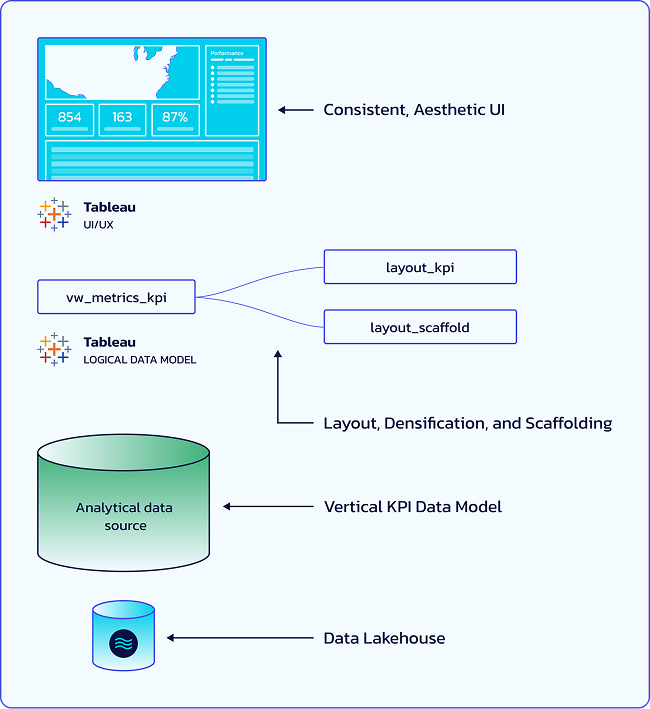
From there, Action designed a governed enterprise data environment capable of bringing disparate program information into a common analytical model.
The resulting platform provided a unified view of supplier performance that could support operational, tactical, and executive decision-making across the organization.
Action's Approach
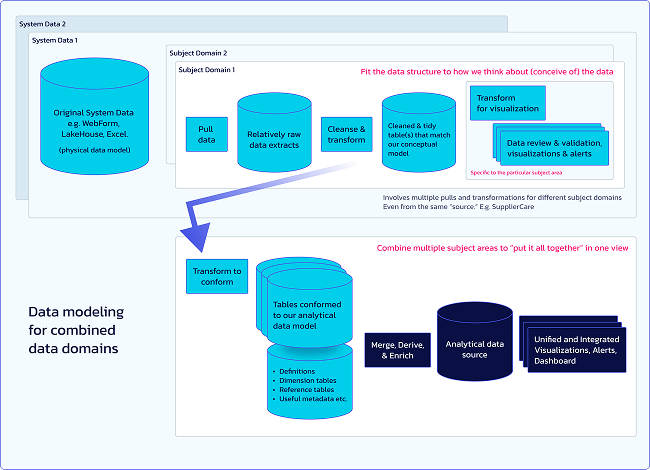
Action treated the engagement as more than a technology migration. Instead of reproducing existing silos in a new environment, the team addressed data literacy, semantic standardization, governance, data architecture, analytical modeling, engineering practices, and information design as parts of the same modernization effort.
Common definitions came first. The analytical architecture was then designed around those shared definitions, allowing previously independent subject domains to become part of a coherent enterprise model.
This combination of organizational enablement and technical modernization turned a collection of disconnected reporting assets into a governed enterprise data product.
Results and Evidence
The Impact
The modernization established the organization’s first enterprise-wide analytical foundation for environmental supply chain reporting.
Eleven previously independent programs became visible through a single governed analytical model. Standardized metrics, business definitions, and controlled vocabulary established a common language for supplier performance.
Global supply managers and other authorized enterprise users gained a single location for assessing current supplier status across participating programs.
The new foundation also made information easier to share beyond the individual programs where it originated and improved the governance, maintainability, reliability, and scalability of the analytical environment.
The Result
11 previously independent environmental and supply chain programs were unified into a single, governed analytical model, giving global supply managers one place to assess supplier performance across the organization.
By The Numbers
11 → 1
11 independent programs with separate reporting processes became one governed analytical model spanning all 11 programs.
First enterprise-wide analytical foundation
The organization moved from having no enterprise data warehouse or governed analytical model to an enterprise-wide analytical foundation capable of sharing information beyond individual program boundaries.
One shared supplier view
Supplier status that had been distributed across isolated systems and program reporting became available to authorized global supply managers from a single location.
Standardized across programs
Inconsistent metrics and program definitions were replaced with standardized metrics,
Standardized across programs
Inconsistent metrics and program definitions were replaced with standardized metrics, controlled vocabulary, and common business definitions for communicating supplier performance.