


AI in Action
Why does AI feel brilliant one moment and broken the next?
In this five-part series, Action’s Robert Rouse steps back from the usual conversations about AI to ask a more fundamental question: Are we thinking about AI in the right way? He argues that we’re often asking AI tools to perform thinking they weren’t designed for.
From Curiosity to Results
AI can be remarkably capable, yet surprisingly unreliable. The difference often comes down to using the right tools for the right tasks.

Part Two
Curiosity and Exploration
AI makes it possible to explore ideas and pursue lines of inquiry faster than ever. Learn how AI can dramatically reduce the cost of exploration, making it easier to generate and test hypotheses, even when definitive answers remain elusive.
Part Three
Analysis and Dialogue
A convincing answer isn't necessarily a correct one. Explore how semantic layers and organizational knowledge can ground AI-generated answers in business reality. With humans and AI agents working together, those answers become easier to verify and defend.

Part Four
Communication and Inspiration
Even the best insights are useless if they don't inspire action. AI can help turn complex analysis into compelling stories that resonate with an audience, but knowing what will resonate, and communicating it responsibly, remains a fundamentally human endeavor.
Part Five
Thriving Through Cognitive Alignment
The key to successful AI adoption isn't bigger models or faster automation. It's matching the right tools to the right kinds of thinking. Bringing together the lessons of the series, Robert explores where AI can make the greatest contribution to analytical work and where human judgment remains indispensable.
SEE THE INTELLIGENCE ENGINE IN ACTION
What If AI Understood Your Business?
AI models are powerful, but they don’t automatically understand your business, your metrics, or the data you trust.
Meet the Action Intelligence Engine, a flexible AI solution that connects powerful AI models with your organization’s data, business context, and workflows.
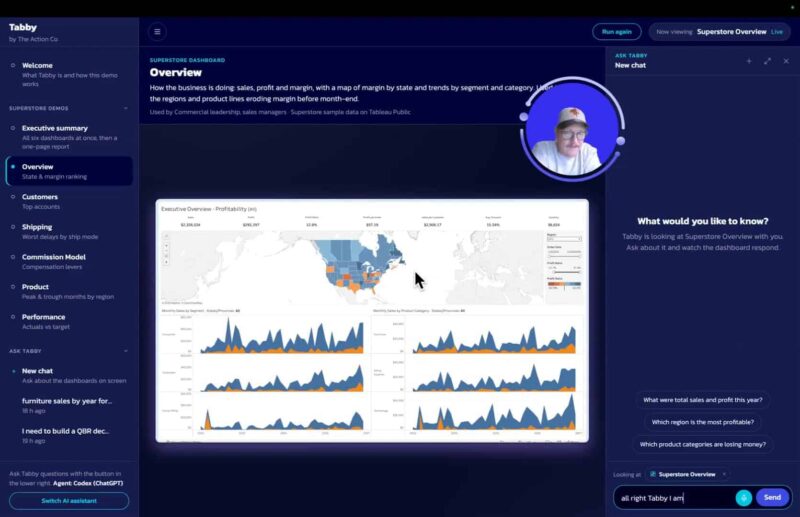
Watch our brief demo to see how a simple question becomes an answer grounded in trusted data. Then book a one-on-one walkthrough to explore what the AIE can make possible for your organization.
Drop your info below to schedule a walkthrough.
We’ll email you a scheduling link so that you can pick a time that works best for you and your team.
Note: Demo requests are subject to review and availability. We'll contact you if your organization's needs align with our current offering.
Key capabilities of the Intelligence Engine
AI That Understands Your Business
The Action Intelligence Engine connects powerful AI models with your organization’s trusted data, business definitions, and workflows, making AI more useful, accessible, and reliable for everyday business decisions.

Ask Questions in Plain English
Give your team a more intuitive way to work with business data. The Action Intelligence Engine helps users explore their data through natural language and get meaningful answers without navigating multiple systems or learning specialized tools.

Answers Grounded in Business Context
Go beyond plausible AI-generated responses. The AIE draws on approved data sources and your organization's established business definitions, grounding its answers in the metrics your teams already trust.

Transparency You Can Trust
Understand the evidence behind the answer. The AIE uses defined analytical methods and supporting context so users can see how an answer was derived and assess its reliability before acting on it.

One Engine, Built Around Your Business
Adapt AI to your existing tech rather than the other way around. The AIE's flexible architecture accommodates different AI models and data platforms. It adapts to existing workflows while preserving your organization's business logic and familiar UX.