

The Business Problem
The Challenge
A Fortune 5 technology company depended on a network of approximately 30 data pipelines to deliver performance metrics to software engineers and decision-makers developing a consumer application.
Those pipelines extracted data from an API, applied business logic, and distributed the results across multiple tables. Over time, the underlying code had become increasingly difficult to maintain. Business logic was scattered across Python code and Airflow workflows, while changes to upstream API responses caused pipeline failures that the existing system could not reliably accommodate.
Eventually, only about a quarter of the pipelines were functioning. The performance team could no longer depend on the automated flow of information needed to evaluate application changes.
The client needed to restore critical reporting quickly while addressing the architectural weaknesses that had made the environment so fragile.
Why It Mattered
The application’s development schedule was tied to fixed release dates. Engineers delivered updates daily and expected performance metrics the following morning to evaluate the impact of their work.
With critical pipelines blocked, the performance team lost much of its ability to identify improvements and emerging problems. Engineers had to compensate with manual data pulls and testing, diverting attention from higher-value development work.
Restoring the data flow was essential to reestablishing the daily feedback loop between software development and performance analysis.
Action's Solution
Our Solution
Action began by diagnosing failures in the highest-priority pipelines rather than attempting to redesign the entire environment before restoring service.
Working with the client’s domain experts and product owner, the team identified where upstream API changes were breaking existing Python and Airflow logic. Action established a prioritized recovery plan, addressing the pipelines with the greatest immediate business impact first.
As critical data flows were restored, Action also identified opportunities to reduce unnecessary complexity. Hard-coded values that required developer intervention for routine operational changes were converted into configurable settings where appropriate.
The engagement produced two complementary outcomes: restored pipeline functionality and a strategic direction for modernizing the underlying platform.
Action's Approach
Restore what matters first. Modernize with what you learn.
Rather than treating immediate recovery and long-term improvement as separate projects, Action pursued both objectives together.
The team made targeted interventions to get critical pipelines functioning again while documenting the architectural patterns responsible for repeated failures. Those findings informed recommendations for consolidating business logic and creating a more resilient, maintainable, and extensible data platform.
Action also brought structure to a complex recovery effort through consistent naming, organized project information, clear priorities, and predictable communication.
This approach helped the client understand what was being addressed, why it mattered, and how the immediate fixes contributed to a longer-term strategy.
Results and Evidence
The Impact
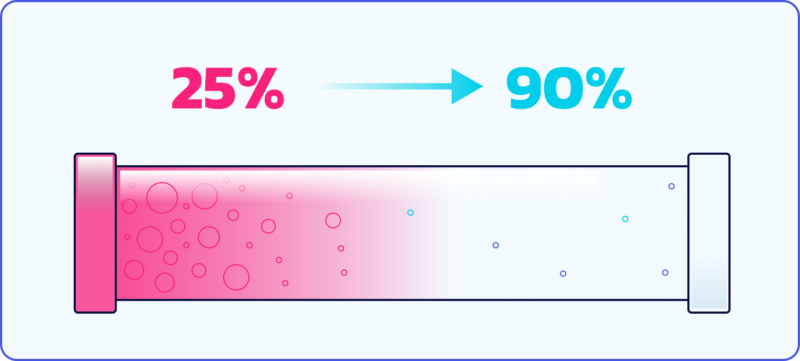 Over eight weeks, Action helped increase the percentage of functioning data pipelines from approximately 25% to 90%, restoring the vast majority of the affected data flows.
With automated reporting restored, the performance team could once again deliver the timely data engineers and management needed to assess application changes. The recovery also reduced manual data pulls and testing, freeing engineers to focus on higher-value development work.
Beyond the immediate operational recovery, Action identified the architectural weaknesses behind the failures and established a modernization strategy to improve the platform’s resilience, performance, extensibility, and maintainability.
By the Numbers
25% → 90%
Approximate increase in functioning data pipelines during the engagement.
8 Weeks
Time required to restore the vast majority of affected pipelines and establish a modernization strategy.
~30 Pipelines
Approximate size of the pipeline environment addressed during the recovery effort.