
Artificial Intelligence
What Companies Should Be Doing to Get AI Right
Now that we’ve had some time to digest what we heard and saw at Ai4 2026, a clearer picture is starting to emerge.
Across three days of sessions on agents, enterprise AI, knowledge systems, skills, interfaces, and infrastructure, the individual technologies varied. But many of them pointed in the same direction. So, beyond experimenting with the latest models and tools, what should companies actually be doing right now?
Here are five things we think matter most.
1. Get Your Organizational House in Order for AI
The unglamorous (“eat your vegetables”) stuff may matter the most: clean data, consistent definitions, clear ownership, and reliable access.
AI can only work with the context you give it. If your organization is difficult for your people to navigate, it will probably be difficult for your agents, too.
2. Build a Company Brain
A huge amount of organizational intelligence still lives in people’s heads, Slack conversations, old documents, and institutional memory.
Start turning that knowledge into shared infrastructure. Capture why metrics are defined the way they are. Document exceptions and preserve decisions. Make domain expertise discoverable and reusable. Teach the organization something once, and your AI systems should be able to use that knowledge again.
3. Connect AI to the Systems Where Work Actually Happens
A chatbot that can answer questions is useful. An agent that can securely access the right context and tools, reason about what it finds, and take an approved action is something else entirely. That means thinking beyond the model to MCP, skills, APIs, permissions, memory, policy, and proof.
The goal isn’t just AI that knows more, it’s AI that can safely do more.
4. Double Down on Domain Expertise
For years, technical expertise was partly defined by command of tools: Tableau, Power BI, Figma, Photoshop, SQL, and dozens of others. As AI gets better at operating those tools, and increasingly at generating the software needed for a particular task, knowing which buttons to push becomes less valuable, while knowing what good looks like becomes more valuable.
That includes data visualization, analytics, design, business strategy, statistics, your industry, your customers.
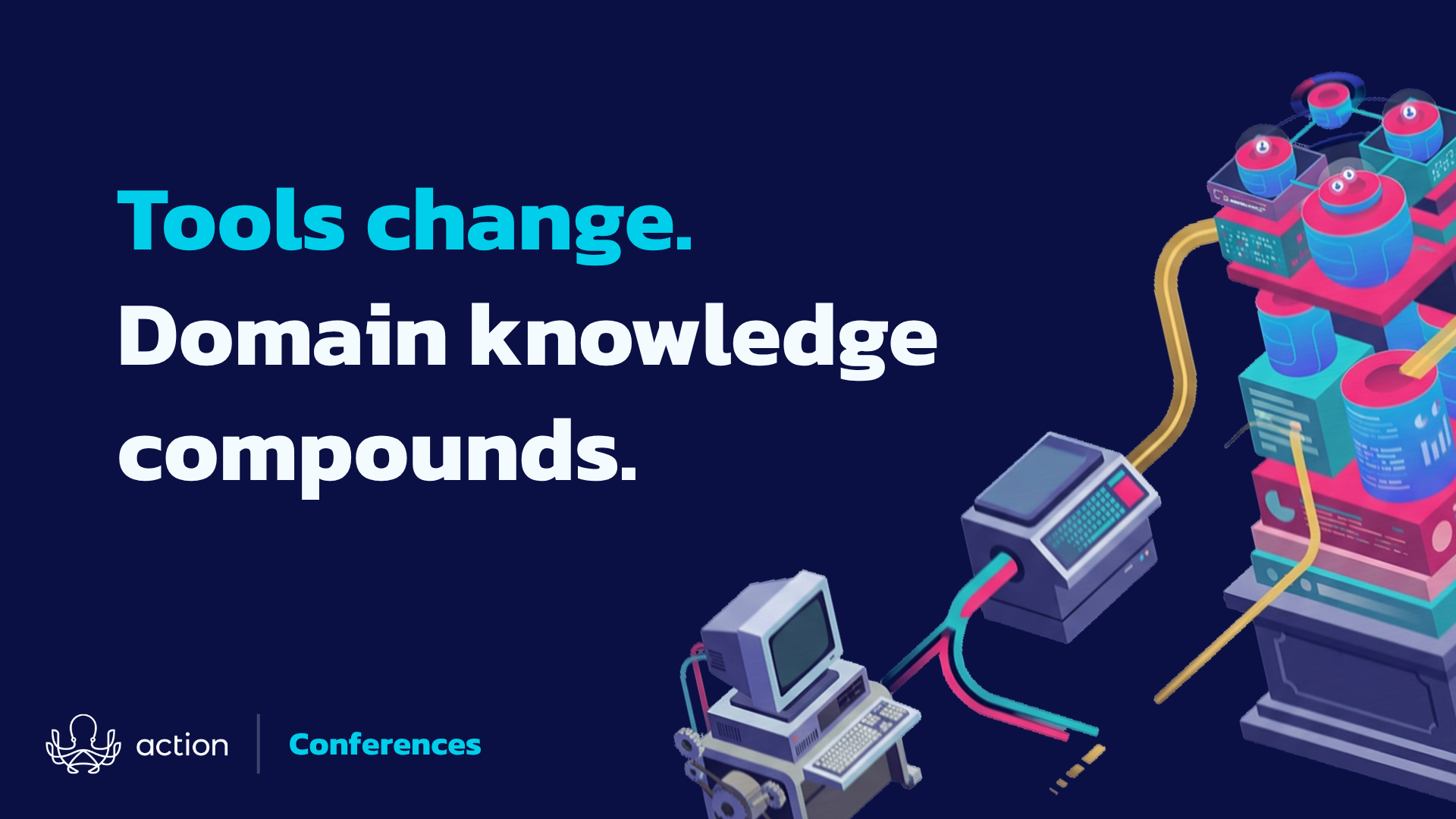
Tools change. Domain knowledge compounds.
5. Start Designing for Agents Alongside People
We’ve spent decades designing software around human interaction: menus, buttons, dashboards, forms, and screens. Agents change that. They need clear documentation, accessible APIs, and permissions and skills they can reliably navigate on their own.
Technologies such as A2UI also suggest that the human interface itself may become more dynamic, generated around the task rather than permanently designed around the application.
The old question was how a person should use the software. The new one is how people and agents should work together to get the task done. That’s arguably the bigger lesson in AI right now.
The model is increasingly just one component. The real advantage comes from everything you build around it: your data, organizational knowledge, domain expertise, architecture, agents, and the systems that allow all of those pieces to work together.
Explore Our Ai4 2026 Conference Coverage
We explore these ideas in more detail in our three-part Ai4 2026 conference series: