
Agents
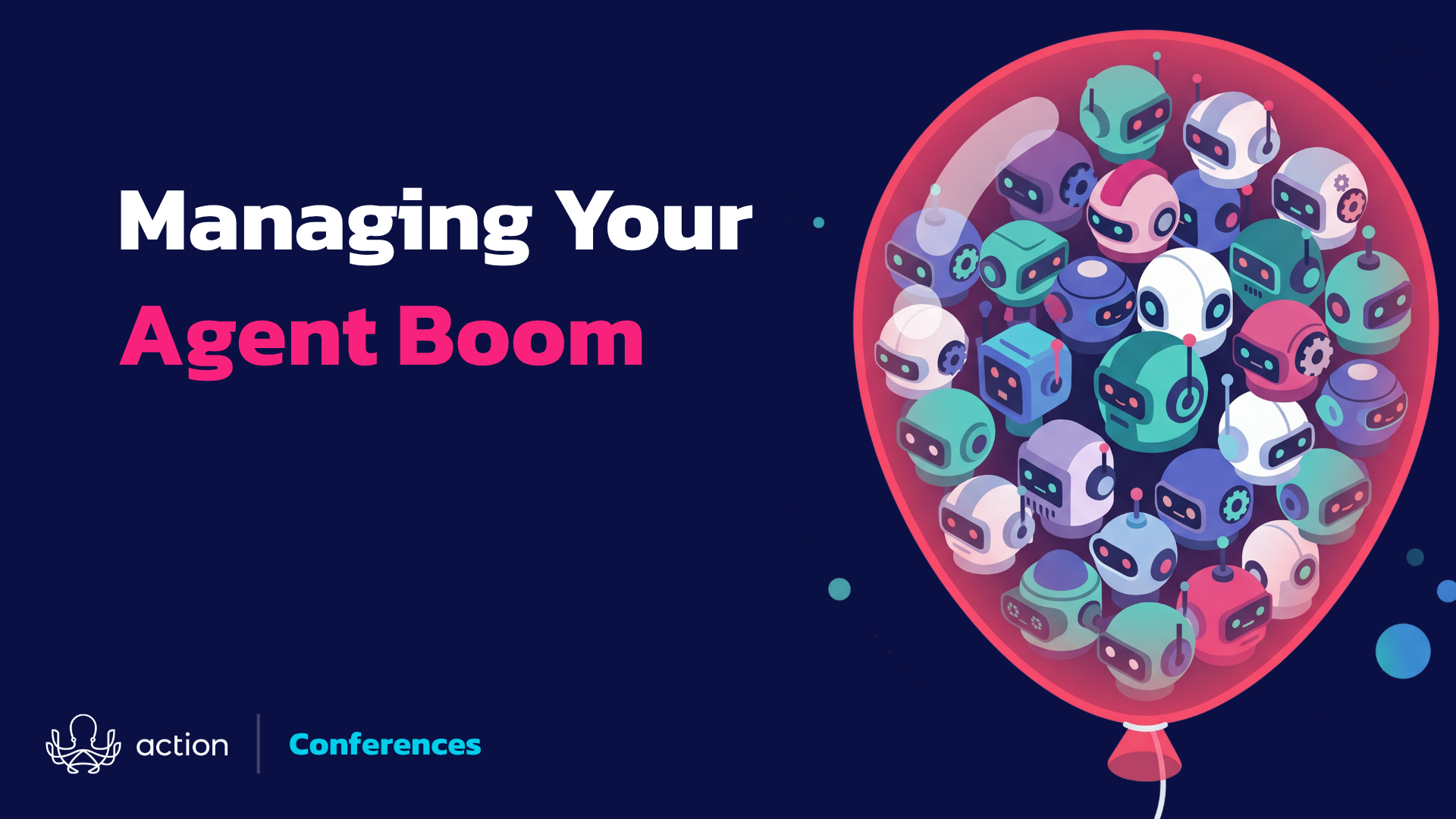
You’re About to Have a Ballooning Agent Estate. Who’s Going to Manage It?

I’m a hard person to sell. This is especially true at technology conferences, where every new feature is revolutionary, every roadmap is transformational, and apparently, everything will change the way we work forever.
So I went to this year’s Dataiku Succeed NYC with a healthy dose of skepticism. I left significantly more bullish on Dataiku than I expected. Not because Dataiku showed off a bunch of clever new AI features. Everyone has clever new AI features.
What caught my attention was something bigger: Dataiku appears to be thinking seriously about what happens after enterprises start filling up with AI agents. Because that is coming. Scratch that. It’s already happening.
You’ve Got Agents!
Over the past couple of years, the enterprise AI conversation has largely been about building things. Can we build an agent that does this? Can we automate that workflow? Can we put an AI assistant here? Can we connect a model to this data?
Those are good questions. But eventually somebody is going to walk into the room and ask a much less exciting question: What exactly have we built? And that’s where the fun begins.
Your marketing team has three agents. Finance has two (until it grows to 10 overnight). Someone in operations built one on AWS. Sales has something running on Salesforce. The data team is experimenting with Databricks. Another group has 10 agents running on Google Cloud. There are probably a few more that nobody even knows of. One of them was built by Steve … and Steve left six months ago. And on and on. One use case at the conference showed over 700 agents across the entire organization when they ran the audit!
Welcome to your agent estate. Which raises a challenge few organizations are fully prepared yet: AI agent management at enterprise scale.
The Next AI Problem Might Be Inventory
This was my biggest takeaway from Dataiku Succeed. As AI agents move from experiments to actual parts of the business, companies are going to need answers to some surprisingly basic questions: What agents do we have? Where are they? Who owns them? Who’s using them? What are they doing? What do they cost? Are they producing business value? Are two of them doing basically the same thing? Which ones should we invest in? Which ones need to change? And which ones should we quietly thank for their service and retire them to the trash? That starts to sound less like AI development and more like workforce management, which makes sense.
If we’re going to talk about agents as a new kind of digital workforce, eventually we’re going to have to manage them like one.
You probably wouldn’t hire 137 employees, scatter them across the company, give them access to various systems, and then say, “I’m sure they’re all doing something useful, but I haven’t checked.” At least I hope you wouldn’t.
This Is Where Dataiku Surprised Me
One of the more interesting things I saw at Succeed was Dataiku’s approach to Agent Management. The important part, to me, is that this isn’t limited to agents created inside of Dataiku. The idea is to provide visibility into agents running across an enterprise’s technology environment.
That’s a meaningful shift, but the problem isn’t, “How do we manage our Dataiku agents?” It’s: How do we understand and manage our agent estate?
That’s a much larger enterprise problem, and I suspect it’s one we’re going to hear much more about as companies move beyond the current experimentation phase. Innovation tends to happen faster than inventory. People build things. Teams experiment. Experiments multiply. Six months later, somebody asks for a spreadsheet. This is how enterprise technology works.
People, Orchestration, and Governance
Dataiku organized much of its vision around three interconnected ideas: People, Orchestration, and Governance. It’s a useful way of thinking about what enterprise AI actually needs to succeed.
People means giving business experts, analysts, and engineers ways to work with AI without everyone needing to become a developer. Orchestration means connecting agents, models, data, and human decisions into workflows that actually accomplish something. Governance means making sure all of this remains visible, accountable, and measurable as it grows.
Dataiku organized much of its vision around three interconnected ideas: People, Orchestration, and Governance. It’s a useful way of thinking about what enterprise AI actually needs to succeed.
People means giving business experts, analysts, and engineers ways to work with AI without everyone needing to become a developer. Orchestration means connecting agents, models, data, and human decisions into workflows that actually accomplish something. Governance means making sure all of this remains visible, accountable, and measurable as it grows. This framing treats AI as an organizational system rather than just a collection of clever tools.
Building an agent is one thing. Making that agent useful to people, integrating it into the business, and ensuring somebody remains accountable for what it does? That’s a different challenge entirely.
From Building Agents to Running Them
At Action, we’re spending a lot of time thinking about what organizations need to make AI useful: trusted data, context, governance, organizational knowledge, clear ownership, and systems that allow humans and AI to work together.
I still believe all of that. But Dataiku Succeed pushed my thinking a step further: What happens when those foundations actually start working? You get more AI, more workflows, more automation, and more agents. Soon the challenge will shift from enabling AI to operating it.
That means governance, yes. But it also means economics, performance, ownership, redundancy, lifecycle management, and business value. Fleet management. An agent that follows every governance policy perfectly but costs $80,000 a year and saves someone 11 minutes every other Thursday is probably not a great agent. (Gold star for compliance, though!)
AI-Generated Doesn’t Have to Mean Invisible
I saw another piece of this in Dataiku’s Cobuild capabilities. The basic idea is familiar: Describe what you’re trying to accomplish conversationally, and AI helps create the datasets, workflows, models, agent configurations, and other assets needed to accomplish it.
AI generating things isn’t surprising at this point. What I found more interesting was what happens after the generation. The result doesn’t simply disappear into a black box. It becomes part of a visual workflow that technical and business teams alike can inspect, understand, modify, and govern.
That matters because business users can move faster without technical teams completely surrendering visibility and control. AI helps build the thing. Humans can still see the thing. This feels like a small distinction until you’ve spent enough time in enterprise analytics. Then it feels enormous.
Agent Audits Will Become a Thing
All of this got me thinking about a new type of engagement I suspect we’re going to see more often: the agent estate audit.
Before an organization launches another big agent initiative, someone needs to understand what’s already there. Map the agents. Identify owners. Understand usage. Measure costs. Assess risk. Look for duplication. Connect agents to actual business outcomes. Then decide what deserves more investment and what doesn’t.
The result isn’t just a governance exercise; it’s a portfolio. And once you can see the portfolio, you can begin to make much better decisions about it.
Maybe an existing agent needs optimization. Maybe two agents should become one. Maybe an agent needs better data or context. Maybe there’s a workflow begging for an agent that nobody has built yet. And maybe Steve’s mystery agent can be turned off.
From Analytics Platform to AI Operating Layer
That’s ultimately why I left Succeed more interested in Dataiku than when I arrived. I expected to see an analytics and data science platform with more AI added to it. What I saw instead suggests something broader.
Dataiku is building an environment for orchestrating and managing the increasingly complicated mix of people, data, workflows, models, and agents inside the enterprise. They’re building a platform that business and technology teams can work together on. That’s a more interesting proposition, and it points to a larger change in the enterprise AI conversation.
For the past few years, everyone’s been asking: What can we build with AI? We’re starting to reach the point where another question matters more: What have we built, and is anybody actually managing it?
Because pretty soon, somebody will want to know exactly what all those agents are doing, how much they cost, and when they veer out of control.