
Newsletters
Action Brief, February 2026
From the Bridge
If there’s a through-line to the first two months of this year, it’s discipline, and why it matters in the business of data now more than ever. Discipline in how we think about AI. Discipline in how we engineer data. Discipline in how we protect time for deep and meaningful work.
From ontology and model grounding to row-level security and the human hand-offs between engineers and analysts, the message is consistent: clarity doesn’t happen by accident. It’s designed.
As the tooling accelerates, our responsibility deepens with it. Systems must be coherent. Definitions must be explicit. And clear thinking must be fostered.
That’s the work.

Your Analytics Advantage
Signal in the Noise: The 2025 AI Retrospective
If 2024 was about AI anxiety, 2025 was about operational reality.
The biggest shift wasn’t model releases, it was the move from “Which model is best?” to “Which model is fit for purpose?” DeepSeek reframed the power conversation around efficiency. OpenAI’s turbulence exposed the tension between safety and utility. Claude quietly became the enterprise default for teams that value stability. Google re-entered with infrastructure muscle.
The 2026 takeaway is simple: stop betting on a single winner. Build architectures that assume volatility. The advantage will go to organizations designed for adaptability, not allegiance. 👉 Read the blog version.
The Downfall of Data Visualization (3-Part Series)
This series wasn’t an obituary for dashboards, it was a warning about drift.
Visualization isn’t disappearing, but rather being squeezed between convenience and control. Conversational AI makes answers faster. Governance reasserts centralized truth. And in the middle, we risk losing something subtle but powerful: exploration.
Language answers the question you ask. Visualization often reveals the question you didn’t know to ask. As interfaces shift toward conversation, leaders must preserve generative wandering, not just optimize for efficiency. 👉 Read the blog version.
The Difference Between AI and Automation
The core distinction is simple: automation executes known rules; AI navigates uncertainty.
Automation is deterministic: input → rules → output. AI (especially LLMs) is probabilistic, predicting what comes next based on patterns. Confusion begins when we expect one to behave like the other.
TL;DR: Use automation when precision and repeatability matter. Use AI when ambiguity, language, and similarity are the problem space. Knowing the difference prevents costly architectural mistakes. 👉 Read the blog version.
More From Action
Making Space for Thinking in a Culture of Urgency
Urgency feels productive, but it often degrades judgment. Complex data work doesn’t yield to haste. It requires uninterrupted attention, tolerance for ambiguity, and enough time to move past surface answers. At Action, deep work isn’t treated as a personal virtue, it’s a systemic design choice.
Thinking is not overhead, it’s the work. Organizations that structurally protect time for focus will outperform those that confuse speed with effectiveness. 👉 Read the blog post.

Why Row-Level Security in Tableau Matters
Part 1: Row-Level Security (RLS) exists to prevent accidental overexposure; without it, “everyone sees everything,” and that’s rarely acceptable. Just ask Bob from Accounting. 👉 Read the blog post.
Part 2: In-Tableau RLS is fast and flexible. It’s ideal for small teams, but performance and governance strain as user counts and complexity grow. 👉 Read the blog post.
Part 3: As organizations mature, centralized or database-native RLS shifts security from workbook-level duct tape to scalable, system-level control. 👉 Read the blog post.
Actionaut Jeremy Paytas Wrote a Children’s Book!
Jeremy Paytas’ Little Data Adventures: Plotting the Perfect Pumpkin makes a simple but powerful case: visual literacy should start early. Through story and play, his book shows how charts reduce cognitive load, support fair comparisons, and build healthy skepticism in young ones.
The message here isn’t just that kids can understand data, it’s that growing up comfortable questioning data and charts can shape more confident, independent decision-makers later in life. 👉 Read the blog post.
Data Engineering Demystified
Action’s Samad Husain continues his Data Engineering Demystified series with these two installments:
The Analyst’s POV: Well-built pipelines don’t just move data, they reduce friction for the analyst turning assets into action. Samad makes the case that engineering quality directly impacts how quickly ambiguity becomes clarity. 👉 Read the blog post.
The Data Scientist’s Dilemma: Machine learning doesn’t fail because of weak models, it fails because of weak inputs. Strong data engineering is the prerequisite for meaningful AI and predictive impact. 👉 Read the blog post.
Ontology Keeps AI Grounded
In this important piece, Action’s founder, Keith Helfrich explains how fluent AI is not the same as reliable AI. The core tension is probability versus determinism: language models predict, but businesses run on definitions, rules, and consequences.
If you want AI to act safely and consistently inside your organization, you must first formalize what your world means. Ontology is how you manage meaning at scale, because when it comes down to it, you can’t govern vibes. 👉 Read the blog post.
Meet the Actionauts: Robert Rouse
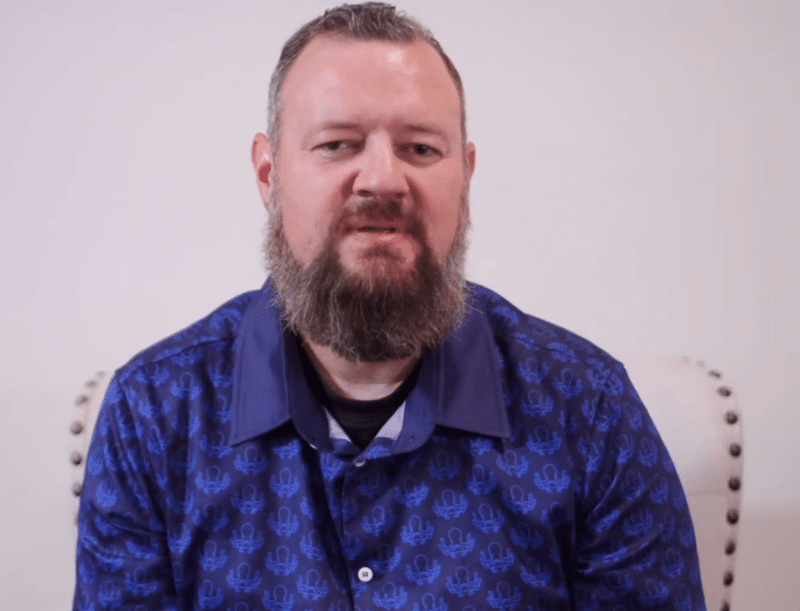
Robert Rouse brings a rare mix of technical rigor and philosophical depth to his work at Action. Known for his wisdom and clarity around design and communication, he consistently pushes teams to think not just about what the data says, but how it’s experienced.
He holds multiple Dataiku certifications and has deep experience working with Neo4j and graph databases, bringing structural thinking to complex data relationships and modeling challenges.
Outside of his client work, Robert serves as a self-described “minister of data,” creating visualizations and resources that explore the Bible through analytics and storytelling.
Over the past few years, Robert has become one of Action’s leading voices on AI, focusing on how emerging tools can be thoughtfully integrated into the workflows of modern data leaders. For him, the question isn’t whether AI will change the world. It’s how to best harness it with clarity, discernment, and human craft.
One From the Vault
Custom Python Environments in Dataiku
When standard database connections aren’t enough, code fills the gap. In this blog post with video, Robert Rouse walks through how Dataiku’s custom Python environments allow teams to extend the platform’s capabilities with external libraries, without wrestling with command-line tooling. 👉 Read the blog post.
The Action Way
The Action Way is our ethos in practice. It details the memorable, foundational principles that shape how our projects move and how we work with each other.
When handing off a task, it’s the passer’s responsibility to place the baton squarely into the receiver’s hand.
From the Quotebase
If you know how things work, then you can work with them.
—Keith Helfrich
Thanks for Engaging with Us!
You can keep up with us through our LinkedIn page, the Action blog, and our YouTube channel.